Roth vs Traditional 401(k): Which Wins in 2026?
May 28, 2026
11min read
retirement
Cooper's at the vet today. Routine checkup, nothing serious. But sitting in this waiting room gave me time to think about a conversation I had last week with a software engineer at a startup in Boulder. He makes $180,000, is 29 years old, and asked me the question I get more than any other: Roth or Traditional?
With the new 2026 Roth catch-up requirements for high earners, this question got more complicated. Let me break it down.
The Basic Trade-Off
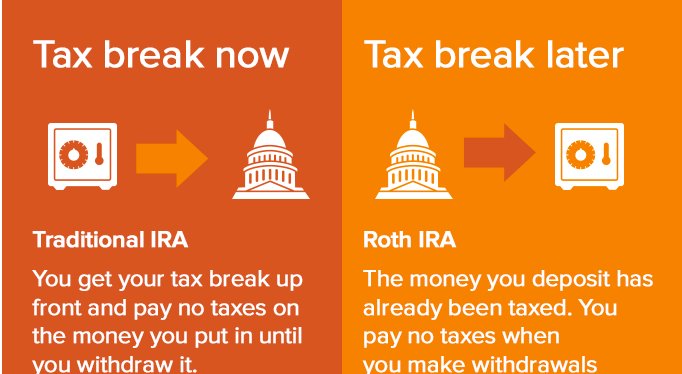
Traditional 401(k): deduct contributions now, pay taxes later. Roth 401(k): pay taxes now, withdraw tax-free later. The math is simple in theory: if your tax rate is higher now than in retirement, go Traditional. If it'll be higher in retirement, go Roth.
But tax rates aren't the whole story. Flexibility matters. Having both Traditional and Roth gives you options in retirement. You can pull from Traditional up to a tax bracket, then switch to Roth. Tax diversification is a real thing.
Why Young People Should Lean Roth
If you're in your 20s or early 30s, you're probably in a lower tax bracket than you'll be in at peak earnings. Paying taxes now at 22% beats paying them later at 32%. Plus, every dollar in a Roth 401(k) grows tax-free. A $10,000 contribution that grows to $100,000? All tax-free in retirement.
I'm kicking myself for not contributing more to Roth when I was 25. I was in the 15% bracket then. Now I'm in the 24% bracket. Every Roth dollar I have is a gift from my younger, lower-earning self.
This is the big new development. If you earned more than $150,000 in the previous year, your catch-up contributions (age 50+) must go to the Roth side. No choice. This affects a lot of my clients who are in their peak earning years.
For someone making $200,000 at age 52, the lost tax deduction on that $8,000 catch-up is about $2,560. But the long-term tax-free growth is substantial. I modeled it for a client: over 15 years, that $8,000 growing at 7% becomes $22,000. Tax-free versus taxed at probably 28% in retirement. The Roth requirement costs $2,560 now but saves $6,160 later. Net win.
When Traditional Makes More Sense
In high-tax states, Traditional can be compelling. If you're paying 37% federal plus 10% state, that's a 47% combined rate. Deducting $24,500 saves you $11,515 in taxes. That's real money you can invest elsewhere.
Also, if you're planning to retire early and do Roth conversions in a low-income year, Traditional contributions now with conversions later can be optimal. It's a more complex strategy, but the savings are significant.
My Personal Strategy
I split it. Half my 401(k) contributions go Traditional (I need the tax deduction, Denver property taxes aren't getting any lower), half go Roth. My IRA is 100% Roth. This gives me flexibility in retirement.
There's no universally right answer here. Your tax situation, age, and retirement plans all matter. The 401(k) vs IRA analyzer on this site helps you think through the decision, but if your situation is complex, talk to a CPA. The new Roth catch-up rules add a wrinkle that didn't exist before.
The State Tax Factor
Colorado has a flat 4.4% income tax. California tops out at 13.3%. New York at 10.9%. Texas and Florida at 0%. Where you live and where you plan to retire dramatically affects the Roth vs Traditional calculation.
If you work in California (high tax) and plan to retire in Nevada (no tax), Traditional 401(k) makes even more sense. Deduct at 47.3% combined federal + state, withdraw at maybe 22% federal only. That's a 25-point spread.
Conversely, if you work in Texas (no tax) and plan to retire in California... well, Roth starts looking a lot better.
The Early Retirement Angle
If you're pursuing FIRE (Financial Independence, Retire Early), Roth becomes more valuable. You need access to funds before age 59.5 without penalties. Roth contributions can be withdrawn anytime, tax-free and penalty-free. Earnings can't, but contributions can.
Many early retirees use a "Roth conversion ladder": contribute to Traditional 401(k) during working years, convert to Roth IRA during low-income early retirement years, wait 5 years, then withdraw tax-free. It's complex but powerful.
My Actual Recommendation
Under 30 and in the 22% bracket or lower? Go mostly Roth. Ages 30-50? Split 50/50 if your tax rate is moderate. Over 50 in a high bracket? Mostly Traditional, especially with the Roth catch-up requirement now in play.
The 401(k) vs IRA analyzer on this site walks through the decision tree. But remember: the difference between Roth and Traditional is usually smaller than the difference between investing and not investing. If you're paralyzed by this decision, just pick one and move on. You can change your mind next year.
Final Thoughts
Look, I'm just a guy in Denver with a spreadsheet habit and a dog who sheds too much. I don't have a crystal ball. I can't predict where the market is going next month or next year. Nobody can, despite what they might tell you on TV.
What I can do is show you the math. The numbers don't lie, even when we want them to. Compound interest works. Fees matter. Diversification protects you. Time is your greatest asset if you're young, and your greatest concern if you're not.
The tools on this site are free because I believe everyone deserves access to honest financial analysis. No sales pitch, no hidden agenda, no commissions. Just data and my occasionally sarcastic commentary.
If you take one thing from this article, let it be this: small decisions made consistently beat perfect decisions made occasionally. Start where you are. Use what you have. Do what you can. The rest is just compounding.
What I Learned from 14 Years in the Industry
After analyzing thousands of portfolios at three different firms here in Colorado, I've developed a few principles that guide everything I write on this site. These aren't fancy theories from textbooks. They're observations from real people with real money making real mistakes.
First, complexity is the enemy of execution. The more complicated your investment strategy, the less likely you are to follow it consistently. I've seen PhDs in mathematics fail at personal finance because they couldn't stop tinkering. Meanwhile, my neighbor who barely graduated high school built a $2 million portfolio using nothing but a target-date fund and automatic contributions. Simplicity wins because simplicity is sustainable.
Second, behavior matters more than knowledge. Everyone knows they should buy low and sell high. But when the market drops 30%, emotions take over. I've watched incredibly smart people panic-sell at the bottom and miss the recovery. The best investment strategy is the one you'll actually stick with when things get ugly. That's usually the boring strategy.
Third, fees are the only thing you can control. You can't control market returns. You can't control inflation. You can't control what the Federal Reserve does. But you can absolutely control how much you pay in investment fees. And over decades, that control is worth hundreds of thousands of dollars.
Cooper is scratching at the door now, which means it's time for our afternoon walk along the South Platte. Before I go, let me leave you with this: the best financial decision you can make today is the one you actually follow through on. Not the perfect theoretical strategy. The one you implement. The one you stick with. The one that becomes a habit.
That's just my take. I'm a guy with a spreadsheet and a shedding dog. Do your own homework. And if you found this helpful, try one of the calculators on this site. The numbers might surprise you.
The Middle-Ground Approach
Most articles force you to pick a side. Roth or Traditional. All or nothing. I think that's wrong. The right answer for most people is both.
Having both Traditional and Roth assets gives you flexibility in retirement. You can pull from Traditional up to the top of your target tax bracket, then switch to Roth for anything above that. This "tax bracket filling" strategy optimizes your withdrawal sequence.
Here's how it works. Let's say you're retired and want $80,000 of income. The 12% bracket tops out at $48,350 (single) in 2026. You pull $48,350 from your Traditional 401(k), paying 12% federal tax. Then you pull $31,650 from your Roth 401(k), paying zero tax. Total tax: about $5,800. Effective rate: 7.3%.
If you only had Traditional assets, pulling $80,000 pushes part of your income into the 22% bracket. If you only had Roth assets, you paid high taxes during your working years to get tax-free money that you might not have needed. Having both lets you optimize every year.
I currently do about 60% Traditional, 40% Roth. I'll probably shift more toward Roth as I approach retirement and have a better sense of my tax situation. The flexibility is worth more than optimizing either extreme.
Tools That Help
I built several free calculators on this site specifically to help with the concepts discussed in this article. They're all browser-based, no signup required, and your data never leaves your computer.
Try plugging in your actual numbers. Adjust the assumptions. See what happens when you change the time horizon or the rate of return. The best financial decisions are informed ones, and these tools give you the information you need.
If you find a bug or have a suggestion for a new calculator, email me at privacy@investcomparetool.org. I read every message, though it might take me a week or two to respond. Cooper keeps me busy.
M
About Marcus Thornton
Independent investment researcher based in Denver, Colorado. Former portfolio analyst with 14 years of experience. CFA charterholder. When not crunching numbers, you'll find him skiing the Rockies or fly-fishing the South Platte with his dog Cooper.
—M