Why Does My 401(k) Statement Look Like a Heartbeat Monitor During a Panic Attack?
Have you ever opened your 401(k) statement and felt like you were reading an EKG? Up 2% in January. Down 4% in February. Up 1% in March. Down 3% in April. Sideways in May. And June? June looks like someone dropped the chart. My statement from last quarter had so many peaks and valleys it could have been a topographic map of the Rockies.
I'm not a day trader. I'm not even an active investor. I'm a guy in Denver who puts 12% of his salary into a target-date fund and checks the balance once a month. I have a master's in finance. I understand volatility. I understand that markets go up and down. But understanding something intellectually and watching your retirement account swing by $8,000 in a single month are two very different experiences.
The Federal rate is around 5.5% right now. That was supposed to be the peak. The Fed was supposed to cut in 2025. Then 2026. Now the futures markets are pricing in maybe one cut by December. Maybe. Geopolitical instability — the conflict involving Iran, rising oil prices, election uncertainty — has bond yields climbing again. The 10-year Treasury is pushing 4.5%. And mortgage rates, which were supposed to fall below 6%, are back at 6.4%.
All of this affects your 401(k). Even if you don't know what a bond yield is. Even if you think the Fed is a building in Washington that has nothing to do with your life. It affects you because it affects the companies you own stock in. It affects their borrowing costs. Their profit margins. Their stock prices. And your retirement balance.
I had a client — let's call him Dave, because he reminds me of every Dave I've ever met — who called me in May. He was 52. He had $340,000 in his 401(k). In April, it was $362,000. He lost $22,000 in four weeks. "Should I move everything to cash?" he asked. "I can't handle this. I'm losing sleep."
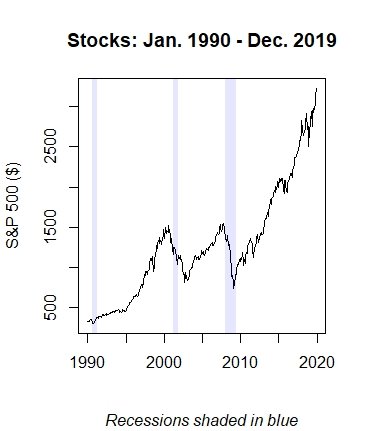
I told him what I tell everyone when the market gets volatile. I told him about the data. Since 1926, the S&P 500 has had intra-year declines of 10% or more in roughly 60% of years. But it has still averaged 10% annual returns. The volatility is the price of admission. If you want the returns, you have to accept the swings. There is no version of investing where you get 10% returns with zero volatility. It doesn't exist. It never has.
But I also told him something more important. I told him that his reaction was normal. That losing $22,000 in a month is scary, even if you know it's temporary. That the human brain is not wired for probabilistic thinking. We feel losses twice as intensely as gains. Daniel Kahneman won a Nobel Prize for proving this. And Dave was feeling it in real time.
What did Dave do? He didn't move to cash. He didn't sell everything. But he did rebalance. He shifted from 80% stocks / 20% bonds to 70% stocks / 30% bonds. He increased his bond allocation because bonds are less volatile and provide a cushion when stocks drop. He didn't abandon the market. He just adjusted his exposure to match his risk tolerance.
And he stopped checking his balance daily. That was the real fix. I told him to check quarterly. Not monthly. Not weekly. Definitely not daily. Because daily checking in a volatile market is like weighing yourself after every meal. The number tells you nothing useful and makes you anxious.
Here's what I want you to take from this. The 2026 market is volatile. It will probably stay volatile. The Fed is in a holding pattern. Geopolitical risk is elevated. Election uncertainty is coming. These are real factors that create real volatility. But they are not reasons to abandon your investment plan.
If you're young — under 40 — volatility is your friend. It means you can buy stocks when they're on sale. Dollar-cost averaging works best in volatile markets because you're buying more shares when prices are low. Over a 20-year horizon, the short-term swings don't matter. The long-term trend does.
If you're closer to retirement — over 50 — you should already be shifting toward bonds and stable assets. Not because the market is scary, but because you have less time to recover from a major drop. A 30% decline when you're 30 is an opportunity. A 30% decline when you're 60 is a crisis. The math is the same. The timeline is different.
My 401(k) is still volatile. It still looks like a heartbeat monitor. But I'm 38. I have 25 years until retirement. And I know — because I've run the numbers, because I've read the research, because I understand compound interest — that the long-term trend is up. The volatility is just noise. And I'm learning to ignore the noise.
— Marcus, from a desk in Denver where the 401(k) statements are read quarterly, not daily
