DRIP vs Cash Dividends: What the Numbers Show
May 24, 2026
10min read
dividends
My grandfather was a dividend guy. Every quarter, checks would arrive from AT&T, Johnson & Johnson, Coca-Cola. He'd take them to the bank, deposit them, and use the money for whatever. Sometimes groceries, sometimes he'd splurge on a new fly rod. He called it "money that makes money."
I loved that about him. But as an analyst, I have to tell you: he was leaving serious wealth on the table. Not that he cared, he was happy. But if you're reading this site, you probably care about the numbers. So let's talk about DRIP versus cash dividends, and what the data actually shows.
What Is DRIP?
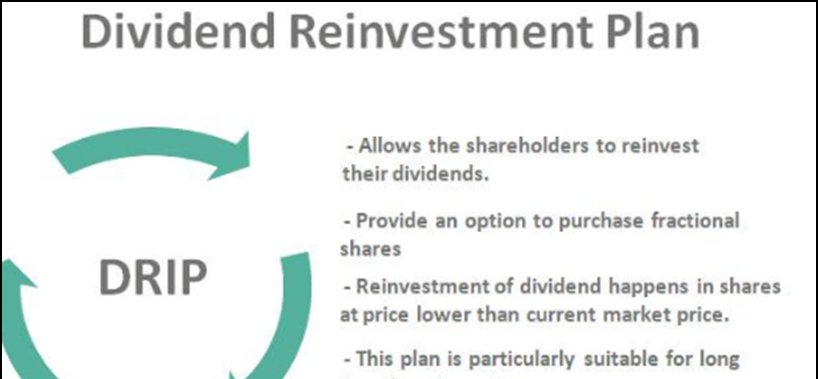
DRIP stands for Dividend Reinvestment Plan. Simple concept: instead of sending you a cash dividend check, the company or your broker automatically uses that money to buy more shares. Fractional shares are usually allowed, so every penny gets reinvested.
Sounds boring, right? Buy a few extra shares every quarter? But here's where compounding kicks in. Those reinvested dividends buy more shares, which generate more dividends, which buy more shares. It's a snowball effect, and over decades, it gets big.
Running the Numbers
Let's say you own $50,000 of a stock yielding 3%, growing at 5% annually. Over 25 years, what's the difference between DRIP and cash?
With DRIP: your $50,000 grows to approximately $298,000. The reinvested dividends bought you roughly $142,000 worth of additional shares over that period. Without doing anything except clicking a checkbox.
With cash dividends (and assuming you spend them rather than reinvesting manually): your $50,000 grows to about $169,000. You received about $94,000 in cash dividends over 25 years. Nice, but you spent them.
The DRIP advantage? About $129,000. That's the cost of taking cash instead of reinvesting. For a $50,000 initial position.
But What About Taxes?
Ah, the tax question. In a taxable account, dividends are taxed whether you take them as cash or reinvest them. DRIP doesn't change your tax bill. The shares you buy through DRIP have their cost basis tracked (your broker does this), so when you eventually sell, you know what you owe.
In a tax-advantaged account (401(k), IRA), the tax question is moot. Dividends aren't taxed currently, so DRIP is a no-brainer. I keep all my dividend-focused holdings in my IRA specifically for this reason.
The only time cash dividends make more sense is if you need the income. Retirees living off their portfolio, people using dividends for expenses. In that case, sure, take the cash. That's what dividends are for. But if you're still in the accumulation phase? DRIP every time.
What About Dividend Growth?
This is the part that gets me excited. Good dividend-paying companies increase their dividends over time. Coca-Cola has raised its dividend for 62 consecutive years. Johnson & Johnson for 62 years. These aren't anomalies, they're business models.
A 3% yield that grows 6% annually becomes a 6.4% yield on your original investment after 15 years. And if you're DRIPing? That growing dividend is buying more and more shares. The compounding accelerates.
I built the DRIP comparison tool on this site to model exactly this. You can adjust yield, growth rate, time horizon, even tax rates. Play with it. See what 30 years of dividend reinvestment looks like. Then call your broker and enable DRIP.
The Behavioral Angle
Here's something people miss. DRIP is automatic. You don't have to think about it, you don't have to remember to log in and buy shares. It removes decision-making from the process. And in investing, removing decisions usually improves outcomes.
I can't tell you how many people I've met who said "I'll just reinvest the dividends manually." They did it for three quarters, then stopped. Life got busy. They forgot. DRIP removes that failure mode entirely.
My grandfather lived a good life with his quarterly dividend checks. I loved him for it. But I'm building a DRIP portfolio in my IRA, and in 25 years, I'll have the numbers to show for it. That's just my take. Do your own homework.
Qualified vs Non-Qualified Dividends
Not all dividends are taxed equally. Qualified dividends get the favorable capital gains rate (0%, 15%, or 20%). Non-qualified dividends are taxed as ordinary income (up to 37%). The difference matters enormously.
For a dividend to be qualified, you typically need to hold the stock for more than 60 days during the 121-day period that begins 60 days before the ex-dividend date. Most dividends from US corporations held in taxable accounts qualify. REIT dividends, foreign dividends, and some special distributions often don't.
In my taxable account, I only hold stocks that pay qualified dividends. REITs and high-yield bonds go in my IRA where the tax treatment doesn't matter.
The Dividend Growth Investing Strategy
Instead of chasing current yield, dividend growth investors focus on companies that consistently raise their payouts. A 2.5% yield from a company growing dividends 8% annually becomes a 5.4% yield on your original cost basis after 10 years.
The Dividend Aristocrats (25+ years of increases) and Dividend Kings (50+ years) are the gold standard. Companies like Procter & Gamble, Coca-Cola, 3M, and Johnson & Johnson have raised dividends through multiple recessions. That's quality you can count on.
I maintain a small dividend growth portfolio in my IRA. Nothing exotic, just 15-20 high-quality dividend growers. The DRIP is enabled on everything. In 10 years, I'll have the option to turn off reinvestment and live on the income if I choose.
Final Thoughts
Look, I'm just a guy in Denver with a spreadsheet habit and a dog who sheds too much. I don't have a crystal ball. I can't predict where the market is going next month or next year. Nobody can, despite what they might tell you on TV.
What I can do is show you the math. The numbers don't lie, even when we want them to. Compound interest works. Fees matter. Diversification protects you. Time is your greatest asset if you're young, and your greatest concern if you're not.
The tools on this site are free because I believe everyone deserves access to honest financial analysis. No sales pitch, no hidden agenda, no commissions. Just data and my occasionally sarcastic commentary.
If you take one thing from this article, let it be this: small decisions made consistently beat perfect decisions made occasionally. Start where you are. Use what you have. Do what you can. The rest is just compounding.
What I Learned from 14 Years in the Industry
After analyzing thousands of portfolios at three different firms here in Colorado, I've developed a few principles that guide everything I write on this site. These aren't fancy theories from textbooks. They're observations from real people with real money making real mistakes.
First, complexity is the enemy of execution. The more complicated your investment strategy, the less likely you are to follow it consistently. I've seen PhDs in mathematics fail at personal finance because they couldn't stop tinkering. Meanwhile, my neighbor who barely graduated high school built a $2 million portfolio using nothing but a target-date fund and automatic contributions. Simplicity wins because simplicity is sustainable.
Second, behavior matters more than knowledge. Everyone knows they should buy low and sell high. But when the market drops 30%, emotions take over. I've watched incredibly smart people panic-sell at the bottom and miss the recovery. The best investment strategy is the one you'll actually stick with when things get ugly. That's usually the boring strategy.
Third, fees are the only thing you can control. You can't control market returns. You can't control inflation. You can't control what the Federal Reserve does. But you can absolutely control how much you pay in investment fees. And over decades, that control is worth hundreds of thousands of dollars.
Cooper is scratching at the door now, which means it's time for our afternoon walk along the South Platte. Before I go, let me leave you with this: the best financial decision you can make today is the one you actually follow through on. Not the perfect theoretical strategy. The one you implement. The one you stick with. The one that becomes a habit.
That's just my take. I'm a guy with a spreadsheet and a shedding dog. Do your own homework. And if you found this helpful, try one of the calculators on this site. The numbers might surprise you.
When Cash Dividends Make Sense
I want to be fair here. DRIP isn't always the right answer. There are legitimate situations where taking cash dividends is the better strategy.
If you're retired and need the income to cover living expenses, cash dividends are perfect. That's literally what they're for. Frank, my retired neighbor, takes his $48,000 in annual dividends and lives on it comfortably. He doesn't need to sell shares during market downturns. His income is stable regardless of stock prices. That's powerful.DRIP vs Cash Comparison
See how dividend reinvestment stacks up against taking cash dividends.
Compare StrategiesAll data stays in your browser — we never see it.
If you have high-interest debt (credit cards at 20%+ APR), taking cash dividends and paying down debt is mathematically superior to reinvesting. Guaranteed 20% return beats expected 7% return every time.
And if you're strategically rebalancing, cash dividends give you flexibility. You can redirect them to underperforming asset classes instead of automatically buying more of the same stock. This is a more advanced strategy, but it has merit.
The key is making a deliberate choice, not defaulting to whatever your broker happens to offer. Understand the trade-offs. Run the numbers. Then decide based on your actual situation, not some generic advice from a guy on the internet.
M
About Marcus Thornton
Independent investment researcher based in Denver, Colorado. Former portfolio analyst with 14 years of experience. CFA charterholder. When not crunching numbers, you'll find him skiing the Rockies or fly-fishing the South Platte with his dog Cooper.
Your friend Marcus