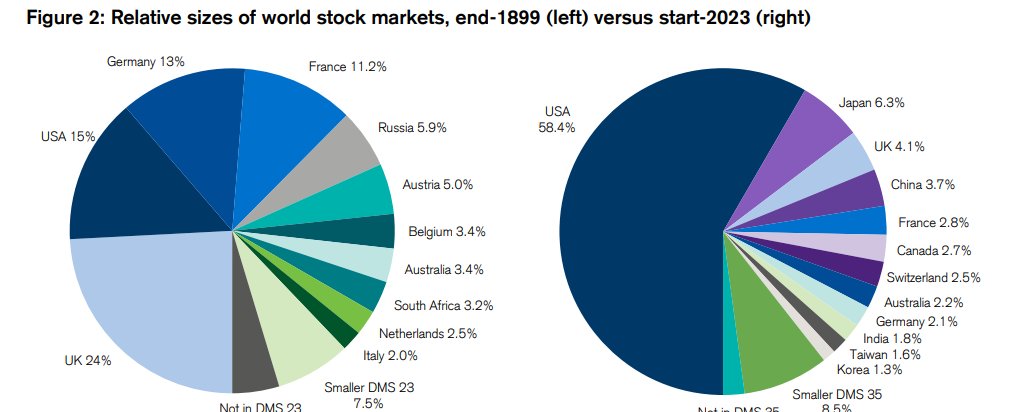
There's a term in finance: home bias. It's the tendency to invest mostly in your own country's stocks. Americans buy US stocks. Japanese buy Japanese stocks. Germans buy German stocks. It's comfortable, it's familiar, and it's probably costing you money.
US investors are particularly bad about this. The US is about 60% of the global stock market by value, but US investors typically have 80-90% of their equity allocation in US stocks. That extra 20-30% is home bias, and it has real consequences.
Why International Stocks Matter
Diversification is the only free lunch in investing. By spreading across countries, sectors, and currencies, you reduce risk without sacrificing expected returns. When the US underperforms, international often outperforms. They don't move in lockstep.
In the 2000s, US stocks returned about 1.4% annually. International developed markets returned 4.1%. Emerging markets returned 9.8%. A globally diversified portfolio crushed a US-only portfolio that decade.
In the 2010s, the situation reversed. US stocks returned 13.5% annually while international returned 5.5%. US-only investors looked like geniuses. Globally diversified investors looked conservative and slightly silly.
Neither decade proves anything except that leadership rotates. The question isn't whether international will outperform, it's whether you can predict when. And you can't.
How Much International?
Vanguard's research suggests holding international stocks at market weight: about 40% of your equity allocation. That's higher than most US investors are comfortable with.
I personally hold about 30% of my equity in international. Split roughly 70/30 between developed markets (Europe, Japan, Australia) and emerging markets (China, India, Brazil, etc.). This gives me meaningful diversification without going full market weight, which frankly makes some clients nervous.
The Currency Question
When you buy international stocks, you're exposed to currency fluctuations. If the dollar strengthens against the euro, your European stocks lose value in dollar terms even if the companies perform well. If the dollar weakens, you get a tailwind.
Over long periods, currency effects tend to even out. But they can create short-term volatility that unnerves investors. If you're the type who checks your portfolio weekly and panics at currency-driven drops, consider a currency-hedged international fund. You'll pay slightly higher fees but avoid the currency roller coaster.
How to Add International
Simplest approach: buy VXUS (Vanguard Total International Stock ETF, 0.08% expense ratio). One fund gets you exposure to every country outside the US, thousands of companies, all for eight basis points.
If you want to split developed and emerging separately: VEA for developed markets, VWO for emerging. This lets you adjust your emerging markets allocation independently. I hold slightly more emerging than market weight because I believe in long-term growth stories in India and Southeast Asia. But that's a personal bet, not a recommendation.
Use the asset allocation planner on this site to model different US/international splits. See what the historical data shows. Then pick an allocation and stick with it.
Emerging Markets: The Volatility Tax
Emerging markets (China, India, Brazil, etc.) offer higher growth potential but come with serious volatility. A standard emerging markets index can swing 20-30% in a single year. Not everyone can handle that.
I hold emerging markets at roughly 10% of my equity allocation. That's market-weight-ish. Some investors go higher, betting on long-term growth in Asia. Some go lower, preferring stability. There's no right answer, but 0% is probably too low for a properly diversified portfolio.
The key with emerging markets is patience. They can underperform for years, even decades, then suddenly surge. Being underweight when that surge happens is expensive. Better to just hold your allocation and rebalance.
Currency Hedging: Yes or No?
When you buy international stocks, you're exposed to currency fluctuations. If the dollar strengthens against the euro, your European stocks lose value in dollar terms even if the companies perform well.
Currency hedging removes this exposure but costs about 0.2-0.3% annually in fees. Over long periods, currency effects tend to even out, so many investors skip hedging. But if you're nearing retirement and want less volatility, a hedged international fund makes sense.
I hold unhedged international. The currency diversification is a feature, not a bug. When the dollar weakens, my international holdings provide a natural hedge against dollar-denominated expenses.
Practical Implementation
Simplest approach: VTI (US total market, 0.03%), VXUS (international total market, 0.08%), BND (bonds, 0.03%). Three funds, global diversification, total cost under 0.05%. This is what I recommend to almost everyone.
For slightly more complexity: split VXUS into VEA (developed markets) and VWO (emerging markets) so you can adjust your emerging allocation. I do this personally because I like having the control, but it's not necessary.
Final Thoughts
Look, I'm just a guy in Denver with a spreadsheet habit and a dog who sheds too much. I don't have a crystal ball. I can't predict where the market is going next month or next year. Nobody can, despite what they might tell you on TV.
What I can do is show you the math. The numbers don't lie, even when we want them to. Compound interest works. Fees matter. Diversification protects you. Time is your greatest asset if you're young, and your greatest concern if you're not.
The tools on this site are free because I believe everyone deserves access to honest financial analysis. No sales pitch, no hidden agenda, no commissions. Just data and my occasionally sarcastic commentary.
If you take one thing from this article, let it be this: small decisions made consistently beat perfect decisions made occasionally. Start where you are. Use what you have. Do what you can. The rest is just compounding.
What I Learned from 14 Years in the Industry
After analyzing thousands of portfolios at three different firms here in Colorado, I've developed a few principles that guide everything I write on this site. These aren't fancy theories from textbooks. They're observations from real people with real money making real mistakes.
First, complexity is the enemy of execution. The more complicated your investment strategy, the less likely you are to follow it consistently. I've seen PhDs in mathematics fail at personal finance because they couldn't stop tinkering. Meanwhile, my neighbor who barely graduated high school built a $2 million portfolio using nothing but a target-date fund and automatic contributions. Simplicity wins because simplicity is sustainable.
Second, behavior matters more than knowledge. Everyone knows they should buy low and sell high. But when the market drops 30%, emotions take over. I've watched incredibly smart people panic-sell at the bottom and miss the recovery. The best investment strategy is the one you'll actually stick with when things get ugly. That's usually the boring strategy.
Third, fees are the only thing you can control. You can't control market returns. You can't control inflation. You can't control what the Federal Reserve does. But you can absolutely control how much you pay in investment fees. And over decades, that control is worth hundreds of thousands of dollars.
Cooper is scratching at the door now, which means it's time for our afternoon walk along the South Platte. Before I go, let me leave you with this: the best financial decision you can make today is the one you actually follow through on. Not the perfect theoretical strategy. The one you implement. The one you stick with. The one that becomes a habit.
That's just my take. I'm a guy with a spreadsheet and a shedding dog. Do your own homework. And if you found this helpful, try one of the calculators on this site. The numbers might surprise you.
Home Bias: The Data
Research from Vanguard shows that US investors hold roughly 75-80% of their equity portfolios in US stocks. Canadians hold 60% in Canadian stocks. Australians hold 66% in Australian stocks. Everyone prefers their home market, regardless of its actual global weight.
This makes sense psychologically. You know these companies. You shop at their stores. You see their ads. They feel safer because they're familiar. But familiarity doesn't equal safety.
The US is about 60% of global market capitalization. A globally diversified portfolio should hold roughly 40% international. Most US investors are 15-20% underweight international. That's a significant concentration risk.
During the 2000s, US stocks returned about 1.4% annually while international developed markets returned 4.1%. US-only investors missed an entire decade of better returns elsewhere. Home bias is comfortable, but comfort is expensive.
Tools That Help
I built several free calculators on this site specifically to help with the concepts discussed in this article. They're all browser-based, no signup required, and your data never leaves your computer. Visualize US vs international allocations and their projected returns. All data stays in your browser — we never see it.Model Your Portfolio
Try plugging in your actual numbers. Adjust the assumptions. See what happens when you change the time horizon or the rate of return. The best financial decisions are informed ones, and these tools give you the information you need.
If you find a bug or have a suggestion for a new calculator, email me at privacy@investcomparetool.org. I read every message, though it might take me a week or two to respond. Cooper keeps me busy.
The Bottom Line
International diversification isn't exciting. It won't make you rich overnight. Some years it'll feel like dead weight dragging down your returns. But over decades, global diversification reduces risk without sacrificing expected returns. And in the years when the US underperforms, you'll be glad you have it.